












Fifteen minutes over open water, in a glass room, above an archipelago — the Hon Thom Cable Car is one long photo opportunity with occasional islets in it. But the sea is bright, the glass is real, and the best frames move. We have shot the line in both sessions and every season, and this guide collects the compositions, the settings that survive glare and motion, and the moments worth setting your watch by.
Key takeaways
- Best light: morning session for the flat, clear sea; the 4:00–4:45 PM return for golden light and the “Roman town” approach.
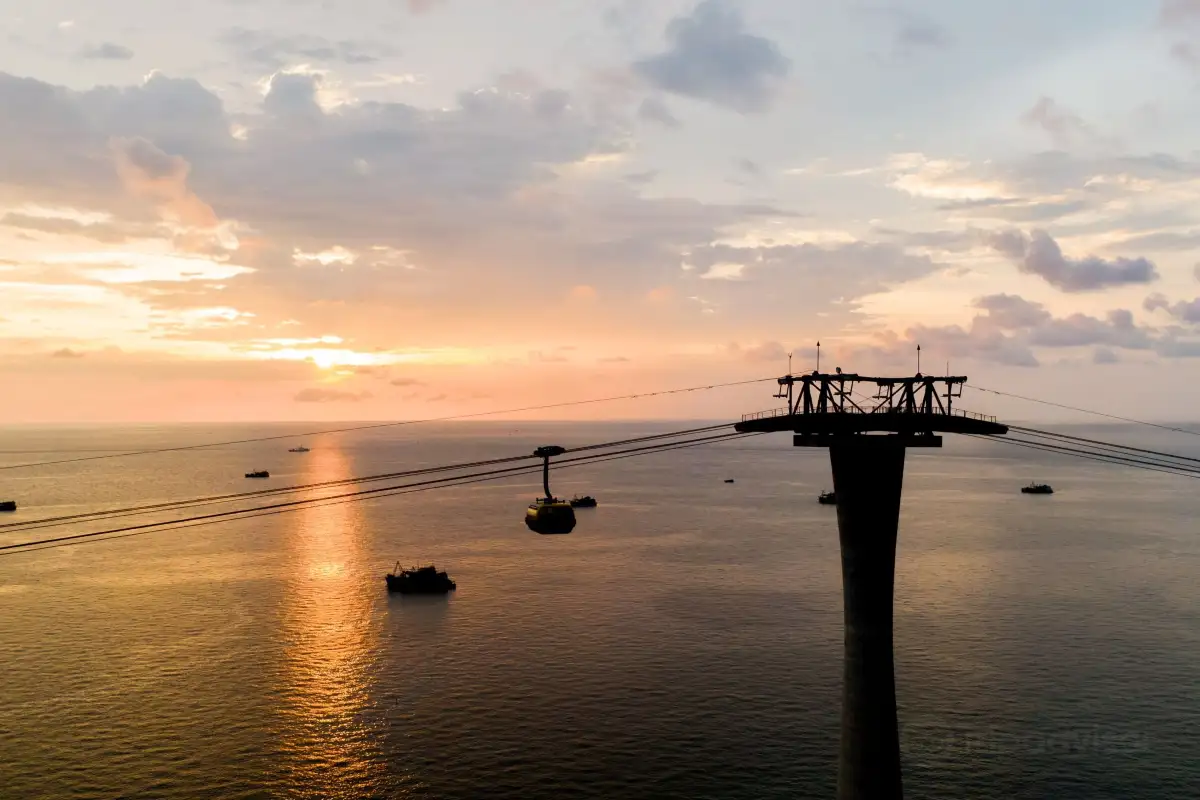
- Five signature frames: the down-shot over an islet, the passing cabin, the tower rising from the sea, the arrival lagoon, and the silhouette return.
- Glass management: lens close to the window, hood on, shoot at an angle through the large glass panes — the reflections disappear at close range.
- Water park bonus: Aquatopia shoots well from the air on the approach — a map-like frame no ground visitor gets.
- Phone shooters are fine: the cabins are stable; a phone with a 2× lens covers almost every frame in this guide.
Quick answer: book the afternoon session on Trip.com, take the front seats on the return, and you get five of the five signature frames in a single ride. Morning is for the water color; late afternoon is for everything else.
The five signature frames
Every memorable Hon Thom Cable Car photo is one of these five. Learn them and the whole ride becomes a checklist you can enjoy.
- The down-shot over an islet — as a small island passes directly beneath the line, shoot straight down through the glass: jungle, pale sand and the turquoise ring of shallows. It is the frame that says “over-sea cable car” in one image.
- The passing cabin — mid-crossing, the opposite-direction cabin slides by just metres away. Wide angle, both cabins and the sea between them: the classic two-cabins-over-the-ocean shot.
- The tower at sea — the support towers rise straight out of the water. Shoot them at cabin height, with a passing cabin or two for scale, and the engineering tells its own story.
- The arrival lagoon — in the last minutes before Hon Thom station, the lagoon opens below and the cabin’s shadow runs across the water. Look down and back for the best angle.
- The silhouette return — on the late-afternoon ride home, towers and cabins go black against the golden sea. Silhouette, not detail — expose for the water.
Shooting through cabin glass
The cabins have large glass windows, which is the whole point — and the one technical obstacle. Three habits fix ninety percent of it: press the lens close to the pane (reflections live in the gap between), shoot at a slight angle rather than dead-on where your reflection sits, and use a lens hood or a cupped hand to shade the front element. Never lean on the glass — the cabins move gently and your photos will feel it.
Worth knowing: the front seats on the return ride are the photographers’ seats — reviewers say it explicitly: on the way back to Sunset Town, take the front so the hillside “Roman town” slides into the frame. There is no assigned seating; board fast and walk to the front-facing side.
Settings that survive glare and motion
The light over the sea is brutal and the subject never stops. The settings below are starting points, not religion:
- Shutter speed first. 1/1000 s or faster for the down-shots and the passing cabin; the sea moves even when the cabin feels still.
- Expose for the water. The sea is the brightest thing in every frame; let the islands and towers go a touch dark rather than blowing the water to white.
- Polarizer, carefully. A CPL cuts glare through the glass and deepens the water color — but it can also create uneven dark patches against cabin glass. Twist it while looking through the viewfinder and stop where the frame is even.
- Burst mode for the pass. The opposite cabin is gone in seconds; fire a short burst and choose the frame where the two cabins align.
- Phones: 2× lens if you have it, tap-expose down slightly on the water, and lock the focus before the islet passes under you.
The golden-hour return, minute by minute
The afternoon return is the shoot the day builds toward. A rough timeline for the ride back to An Thới:
- T–15 min. Leaving Hon Thom: shoot back at the island — the coast recedes and the towers line up into the distance.
- T–10. Mid-sea: the water turns to hammered gold; this is silhouette country for the towers and the passing cabin.
- T–5. The first islets reappear below — one last down-shot, now in warm light.
- T–2. Sunset Town and the “Roman town” climb the hillside ahead; front seats earn their keep right here.
- T–0. Into An Thới station — switch to the seafront and the Kiss Bridge if your bundle includes it: the bridge at dusk is the natural final frame.
Aquatopia and ground-level shots
The photography does not start and end in the cabin. On the approach to Hon Thom, Aquatopia spreads out directly beneath the line — slides, pools and the fast-flowing river in a graphic, map-like composition that no one on the ground can get. Down on the island, the park shoots best in the midday session gap: the slides against blue sky from the bottom, the river from the bridge, and the universal favorite — the moment someone hits the drop slide. Water protection matters more than megapixels down here; a cheap pouch beats a fancy lens you dare not raise.
And back on the Phú Quốc side after the ride: Sunset Town’s Mediterranean lanes and the hillside “Roman town” give you the street-level counterpoint to your aerial frames — the same skyline, fifteen minutes apart, from two completely different altitudes.
Frequently asked questions
Which session is better for photography?
Morning for the sea color — the water layers read clearest in flat morning light. Late afternoon for everything else: golden tones, the silhouette return and the Sunset Town approach. If you shoot once, ride the afternoon return around 4:00–4:45 PM.
Can I use a drone?
The cable line crosses open sea at height, near a busy attraction and a developing town area — this is exactly the kind of place to check and respect local drone rules on site rather than assume. The honest answer: the best aerials here are the ones the cable car itself provides.
How do I avoid reflections in the cabin glass?
Lens close to the pane, slight angle, hood or cupped hand as a shade. Reflections live in the air gap between lens and glass; remove the gap and they mostly disappear.
Is there time to set up shots?
Fifteen minutes each way is generous — enough for all five signature frames at a relaxed pace. The only moment that demands speed is the passing cabin: keep the camera unlocked and in burst mode through the middle of the crossing.
What about shooting the water park?
From the air on the approach (the map shot) and at ground level in the session gap. Bring a waterproof pouch — the lazy river and the wave pools are the two best ground-level scenes, and both involve getting splashed.
Book the light, then bring the battery
Five signature frames in one return ride
Instant confirmation, any international card, e-ticket boarding — the afternoon session ends in the best light of the day.
Build the shoot into the trip: time it with the best-time guide, price it with the tickets guide, and slot it into a full day with the itineraries guide. The Visitor Guide has the practical details.
Sources & official references
- Trip.com — Hon Thom Cable Car – Sun World Hon Thom attraction listing (checked October 2026): large glass-window cabins, 360-degree aerial views, one-way journey about fifteen minutes.
- Verified traveler reviews on Trip.com (24,709 reviews, 4.5/5 average) for the front-seat return tip, the “Roman town” view and the private-cabin photo story.
- Compositions and settings tested by our editorial team across both sessions on 2025–2026 visits.
